
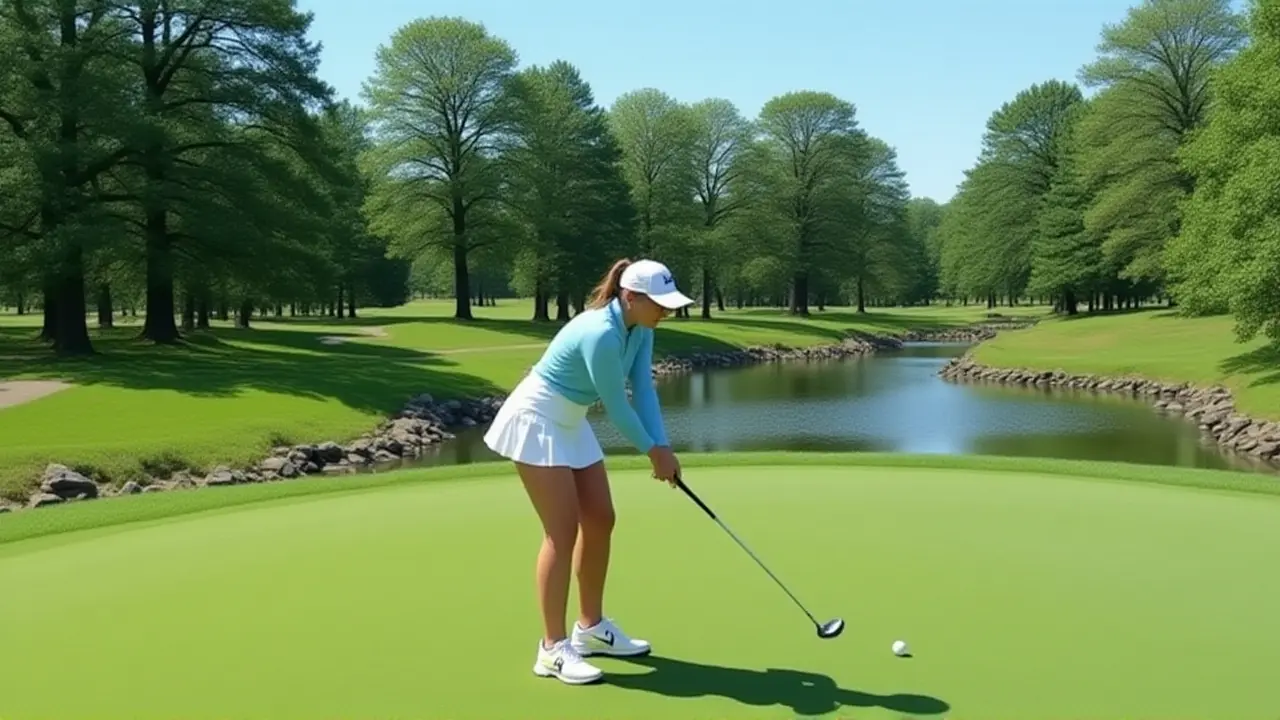
A 75-second clip of a hesitant tee shot has sparked a firestorm on social media, but there's a much heavier story behind the struggle. Bailey Shoemaker, a 21-year-old standout from the University of Southern California, found herself at the center of a viral storm during the first round of the Augusta National Women's Amateur Champions Retreat on Wednesday, April 1, 2026. The footage, broadcast by the Golf Channel, showed the junior golfer taking roughly 1 minute and 12 seconds to execute a single shot on the par-3 8th hole, balking multiple times before finally making contact.
Here's the thing: while critics were quick to label it as poor etiquette or a bizarre pre-shot routine, the reality is a grueling medical battle. It turns out the hesitation wasn't a lack of focus, but a failure of communication between a brain and a body recovering from major surgery. For a player who has previously dominated at this venue, the viral moment served as a painful reminder of how a single out-of-context clip can overshadow a massive personal comeback.
Key Facts: The Viral Incident
- The Clip: A 75-second video showing Shoemaker struggling to complete her backswing.
- The Timing: Occurred during the first round of the ANWA at Champions Retreat in Evans, Georgia.
- The Duration: Shoemaker spent 1 minute and 12 seconds over the ball on the 8th hole.
- The Reaction: Immediate social media backlash regarding "slow play" in professional golf.
The Hidden Battle: Cubital Tunnel Syndrome
The twist is that the world wasn't seeing a golfer struggling with nerves, but someone fighting through the aftermath of cubital tunnel syndrome. In October 2025, Shoemaker underwent surgery to repair the nerve compression in her right arm. But the surgery was only the final step of a nightmare; before that, she spent seven months playing through what she described as "excruciating pain."
Interestingly, the numbness was so severe that her fingers would sometimes involuntarily let go of the club at the top of her swing. That's a terrifying prospect for any athlete, let alone one competing at an elite level. Speaking with Claire Rogers of GOLF, Shoemaker revealed the invisible grind she's been enduring: five-hour daily home workouts and waking up before dawn for rehabilitation sessions. "You don't see what's behind the scenes," she noted, admitting she once feared she might never play competitively again.
Performance and the Cut at Champions Retreat
Despite the mental and physical hurdles, Shoemaker's scorecard tells a story of resilience. She shot a 1-over 73 in the first round—the round where the viral clip occurred. She followed that up on Thursday with another 73, bringing her two-round total to 146. Unfortunately, that left her three shots short of the cut line, as she entered the second round already eight shots behind the lead.
But wait, there's a silver lining. Shoemaker insisted her second round was actually a step forward. "It was better today," she told reporters, noting that the viral clip was from her "worst" moment and didn't represent the other 35+ holes she played. It's a classic case of a highlight reel (or in this case, a 'lowlight' reel) ignoring the steady progress of a recovery journey.
The Broader Struggle with Slow Play in Golf
This incident has touched a raw nerve in the golfing community. Slow play is a persistent plague, affecting everything from local municipal courses to the highest levels of the professional game. When viewers see a player take over a minute to hit a ball, the instinct is to criticize. However, this specific case highlights the danger of assuming a player's pace of play is a choice rather than a limitation.
Industry observers, including writers from Golf Monthly and Bunkered, have used this moment to discuss the intersection of athlete health and broadcast expectations. While pace of play is essential for tournament flow, the human element—specifically chronic injury—often gets lost in the shuffle of a televised broadcast.
Looking Ahead: A Legacy of Excellence
Shoemaker isn't a stranger to success at Augusta National. In 2024, she finished as the runner-up at this very event and famously shot a record-breaking 66 at the legendary course two years prior. That pedigree is exactly why her current struggle is so poignant; she knows what it's like to be perfect on this stage.
Even after missing the cut, Shoemaker was scheduled to play at Augusta National on Friday during the event's traditional "in-between day." It's a chance for her to reset and remember why she fought through the surgery and the rehab in the first place. For now, she's choosing not to take the social media noise to heart, focusing instead on the long road back to her peak form.
Frequently Asked Questions
Why did Bailey Shoemaker's swing look hesitant in the viral video?
The hesitation was caused by the recovery process from cubital tunnel syndrome surgery she underwent in October 2025. She suffered from severe numbness and excruciating pain for seven months prior, which caused a disconnect between her brain and body, sometimes leading to involuntary release of the club during her backswing.
What were Shoemaker's scores at the Augusta National Women's Amateur?
Shoemaker shot a 1-over 73 in both the first and second rounds, totaling 146 over 36 holes. This score was three shots too many to make the cut, though she noted that her second-round performance showed improvement over the first.
What is cubital tunnel syndrome and how does it affect golf?
Cubital tunnel syndrome occurs when the ulnar nerve is compressed at the elbow. For a golfer, this can cause numbness in the fingers and a loss of grip strength or motor control, which is critical during the backswing and impact phase of a golf shot.
Has Bailey Shoemaker succeeded at Augusta National before?
Yes, she has a strong history at the venue. She finished as the runner-up at the event in 2024 and previously shot a record-setting 66 at Augusta National, marking her as one of the top junior players to compete at the course.
How did the golfing community react to the slow-play clip?
The reaction was largely critical, with social media users accusing her of contributing to the sport's systemic "slow play" problem. However, after the medical context regarding her arm surgery was revealed, much of the conversation shifted toward the importance of athlete recovery and the dangers of judging players by short video clips.


Write a comment