
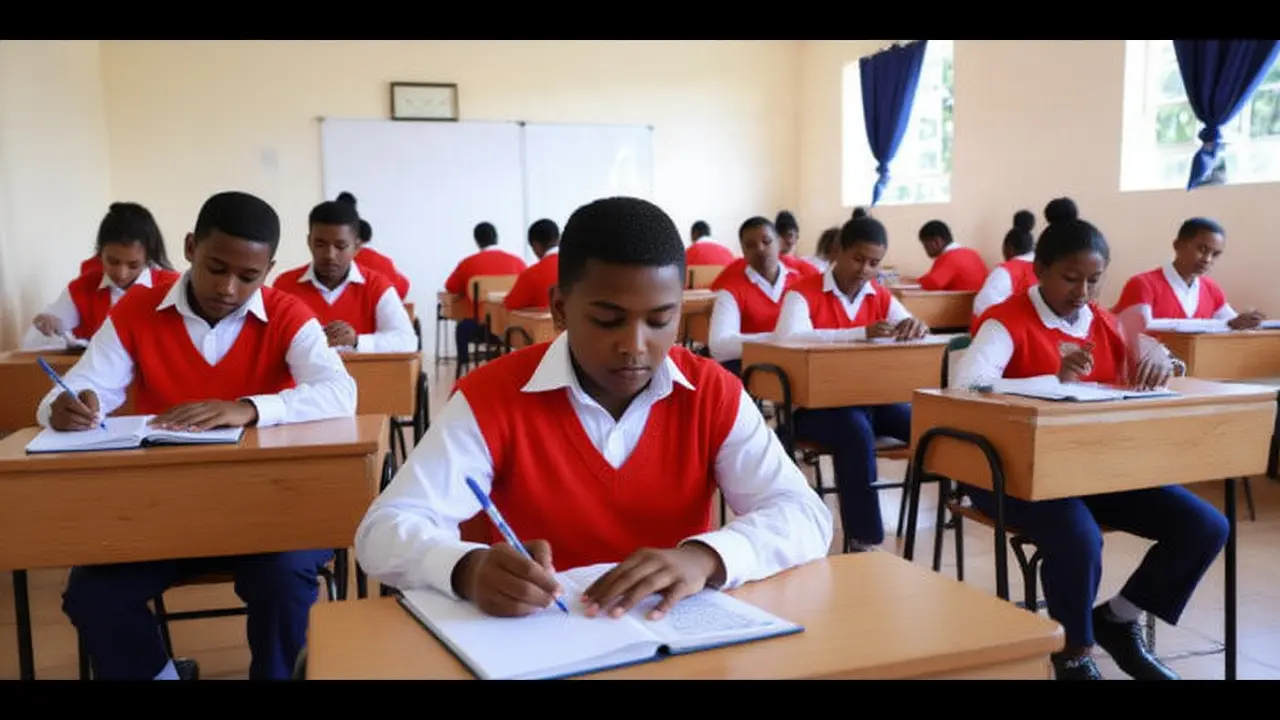
When Kenya National Examinations Council (KNEC) quietly activated its online results checker this week, it sent a ripple of anticipation through thousands of households across the country. The move comes just days before the official release of the 2025 Kenya Certificate of Secondary Education (KCSE) results, which are scheduled for Friday, January 9, 2026.
For students who sat their final secondary school exams between October and November last year, the wait is nearly over. But here’s the thing: the digital infrastructure is already live. This isn’t just a technicality; it’s a deliberate shift toward faster, more transparent access to life-changing academic outcomes.
The Countdown Begins in Eldoret
The official ceremony will take place at Chepisaas Boys Secondary School in Uasin Gishu County. It’s not just any venue—it’s symbolic, representing the heartland of Kenyan secondary education. Education Cabinet Secretary Julius Migos Ogamba, Cabinet Secretary for Education is expected to preside over the event starting at 9:30 am on January 9.
This follows a precise timeline. The 2025 KCSE examinations ran from October 21 to November 21, 2025—a full month of intense testing for nearly one million candidates. Now, after weeks of marking, moderation, and data processing, the moment has arrived.
But why activate the portal early? Turns out, KNEC wants to avoid the chaos of past years when servers crashed under pressure. By pre-loading the system, they’re betting on smoother user experience—even if traffic spikes dramatically within minutes of the announcement.
How Students Can Check Their Results
If you’re a candidate or parent, here’s what you need to know. You have three main options:
- Online Portal: Visit the official KNEC results website. Enter your 11-digit index number and registered name exactly as they appear on your exam form. Accept the privacy notice, click submit, and view your provisional slip instantly. You can download or print it right away.
- SMS Service: Send your index number followed by “KCSE” to short code 20076. Each message costs Sh25. Simple, but slower during peak times.
- School Collection: Physical result slips will be distributed at individual schools shortly after the national release. This remains the formal method for obtaining certified documents needed for university applications.
Multiple YouTube tutorials have already circulated showing step-by-step guides. One presenter noted that the portal was “just opened” but still awaiting data—confirming that while the interface is ready, the actual grades aren’t public yet. Smart planning, really.
Numbers That Matter
Let’s talk stats. According to reports from Bizna Kenya, approximately 993,000 candidates sat for the 2025 KCSE exams. TechTrendsKE puts the figure slightly higher at 996,078. Either way, we’re looking at close to a million young people whose futures hinge on these results.
Here’s the breakdown so far:
- Grade A achievers: 1,932 students earned the top grade—an impressive feat given the competition.
- C+ and above: Around 270,000 candidates scored C+ or better, qualifying them for direct entry into public universities under current admission rules.
- Gender parity: Girls made up exactly 50% of all test-takers, reflecting steady progress in gender balance in secondary education.
These numbers aren’t just digits—they represent real lives, dreams deferred or accelerated based on performance. And for those scoring below C+, alternative pathways like TVET institutions and private colleges remain open.
Technical Glitches? Don’t Panic
We’ve seen this movie before. When millions try to log in simultaneously, websites slow down—or worse, crash entirely. KNEC knows this. That’s why they’ve set up two toll-free helplines: 0800-721-410 and 0800-724-900. Call them if you’re stuck waiting endlessly for pages to load.
Tech experts suggest clearing your browser cache if the site freezes. Try using mobile data instead of Wi-Fi. Be patient. Most importantly, don’t refresh repeatedly—that only adds to server strain.
In previous years, SMS became the backup plan when portals failed. This time, with both channels active, there’s less risk of total blackout. Still, expect some friction. It’s human nature—and technology—to struggle under sudden demand.
What Comes Next?
Once results go live, the real work begins. University admissions offices will start reviewing applications immediately. Students with strong scores may secure spots in competitive programs like medicine, engineering, or law. Others might pivot toward vocational training or gap-year strategies.
Education authorities emphasize that this release marks a major milestone in Kenya’s annual calendar. For families, it’s emotional. For policymakers, it’s analytical. For educators, it’s reflective. Every score tells a story about curriculum effectiveness, teaching quality, and student resilience.
Looking ahead, KNEC plans to refine its digital services further. Future releases could include personalized dashboards, predictive analytics for course selection, even AI-driven career counseling tools. The goal? Make post-secondary transitions seamless.
Frequently Asked Questions
When exactly are the 2025 KCSE results being released?
The official release date is Friday, January 9, 2026. The ceremony starts at 9:30 am at Chepisaas Boys Secondary School in Eldoret. Online results become available immediately afterward via the KNEC portal and SMS service.
How many students took the 2025 KCSE exams?
Approximately 993,000 to 996,078 candidates participated, depending on the source. About half were female, and roughly 270,000 scored C+ or above, making them eligible for direct university entry.
Can I check my results without internet access?
Yes. Use the SMS option by sending your index number plus “KCSE” to 20076. Each query costs Sh25. Alternatively, visit your former school to collect the physical result slip once distributed locally.
Why did KNEC activate the portal before the release?
To prevent server overload and ensure smooth access. Pre-activating allows technical teams to monitor performance and fix issues proactively rather than reactively during high-traffic periods.
Who qualifies for direct university entry?
Students who achieve a mean grade of C+ (plus) or higher qualify for automatic consideration in public universities. Those with lower grades may apply through other routes including diploma courses or private institutions.
What should I do if the portal doesn’t load?
Try switching networks, clear your browser cache, or use SMS instead. If problems persist, call KNEC’s toll-free support lines: 0800-721-410 or 0800-724-900. Avoid refreshing constantly—it worsens congestion.






The activation of the portal is merely a digital mirage, a prelude to the existential crisis that awaits these young souls when they confront their academic reality. It is not about the grades themselves, but about the societal construct that values quantification over holistic human development. We are building a society that measures worth in digits rather than character.
Oh, look at us, marveling at basic server load balancing as if it were the invention of fire 🙄. The fact that KNEC had to 'pre-load' the system suggests years of incompetence masked as innovation. Meanwhile, the real elite don't need portals; they have connections. But sure, let's celebrate the SMS service for the masses who can afford Sh25 per query. Truly inspiring. 📉
It is important to remember that every student has a unique journey. While the statistics show 270,000 students scoring C+ or above, we must also support those who did not meet this benchmark. Alternative pathways like TVET are valuable and should be encouraged without stigma. Let us foster an environment where all outcomes are respected.
You people are so naive to think this is just about exams. This is a systematic attempt to control the narrative of our youth through digital surveillance disguised as convenience. In India, we understand that true education happens in the streets, not on servers that crash under pressure. Your reliance on technology shows your weakness. We do not need portals; we have resilience. Do not let them trick you into thinking speed equals quality. It is a trap for the weak-minded. Stay strong and ignore the hype.
I bet half the 'A' grades were leaked before the exam even started. Typical government operation. They activate the portal early to test the waters for data harvesting. Who do you really think benefits from this 'transparency'? Not the students. Always question the source.
There is a profound moral decay in how we treat these results. To reduce a year of struggle to a single letter grade is ethically bankrupt. Yet, here we are, discussing server speeds. Where is the compassion? Where is the dignity? The system is broken, and we are complicit by participating in it with such excitement.
Have you considered the algorithmic bias embedded in the grading moderation process? The 'data processing' phase is likely where the social engineering occurs. By standardizing the output, they homogenize the intellectual diversity of the candidates. It is a subtle form of cognitive suppression. Wake up to the matrix of standardized testing.
Let’s keep the energy positive! Every result is a new beginning. Whether you got an A or a D, there is always a path forward. Celebrate the effort, learn from the experience, and keep moving. You’ve got this! ✨
Ha! 'Smooth user experience.' Right. Because nothing says smooth like a million teenagers refreshing a page until it melts. This is peak irony. The elites will get their spots regardless of the portal crashing. The rest of you can fight over the scraps while the servers burn. Classic.
Your mindset is the problem, not the portal. If you cannot handle the pressure of checking your results, how will you handle the corporate world? Stop whining about glitches and start fixing your own weaknesses. The system works perfectly fine for those who deserve it. Weaklings complain; winners adapt. Get a grip.
We must bridge the gap between traditional values and modern technology. While the digital portal offers efficiency, we should not lose sight of the communal aspect of receiving news together. Perhaps schools can host viewing parties to ensure no one faces this moment alone. Unity in diversity, both in culture and in outcome.
It is wonderful to see such technological advancement!! However, we must ensure that everyone has access to the necessary tools!!! Please help those who may not have internet connectivity!!! Collaboration is key!!! Let us support each other during this time!!!
I’m just watching from the sidelines. Seems like a lot of drama for a website loading. Good luck to everyone though.
I find myself deeply troubled by the superficiality of this discourse, wherein the collective anxiety of a nation is reduced to mere technicalities of server uptime and SMS costs, thereby ignoring the profound emotional toll that such high-stakes assessments inflict upon the fragile psyches of adolescents who are already burdened by the weight of parental expectations and societal pressures, which often manifest in destructive behaviors and long-term psychological scars that are rarely addressed in public policy discussions regarding educational reform and mental health support systems for students undergoing significant transitional periods in their developmental trajectories.