
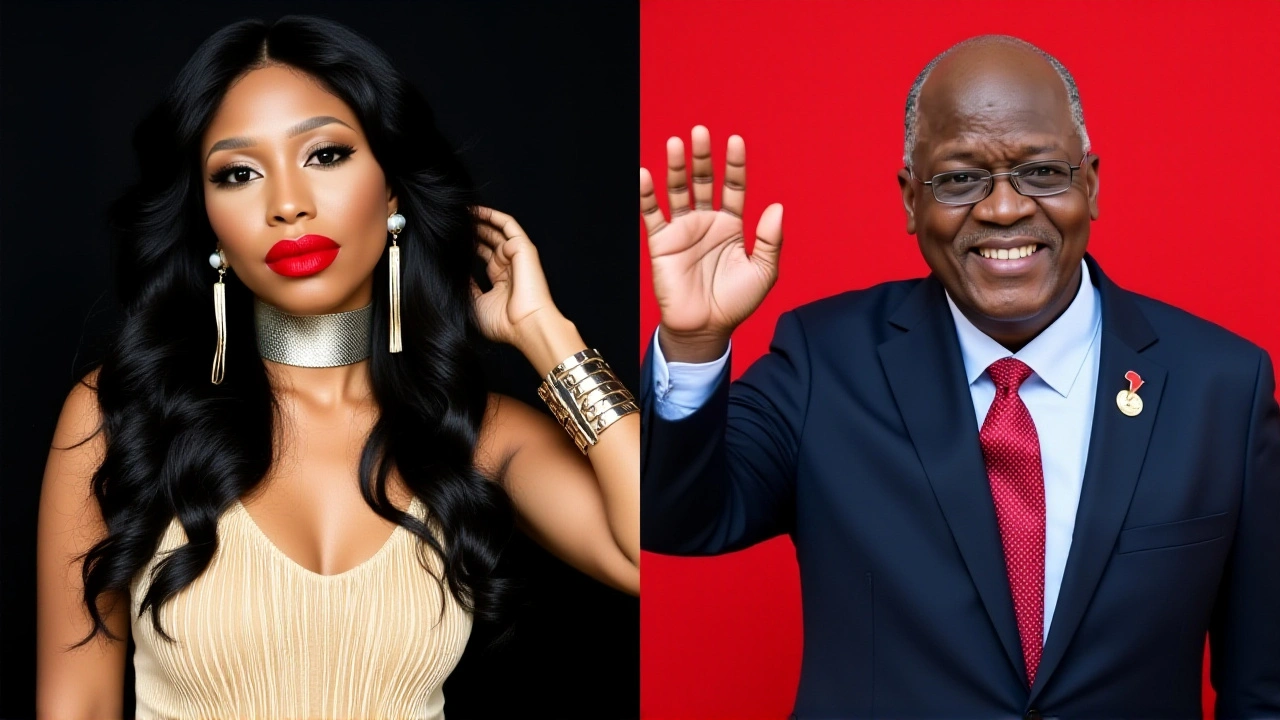
When Mange Kimambi woke up on December 5, 2025, her Instagram feed was gone. So was her WhatsApp. So was her voice — at least online. The US-based Tanzanian activist, known across East Africa as Sister of the Nation (Dada wa Taifa), had just lost the digital megaphone that connected her to nearly three million followers documenting what she called state-sponsored kidnappings, killings, and electoral fraud. Her accounts, she says, didn’t vanish because of a glitch. They were erased because the Tanzanian government wanted her silenced before the December 9, 2025 protests.
The Silence Before the Storm
Kimambi, who has lived in the United States since 2012, wasn’t just posting memes. She was archiving evidence. Videos of masked men dragging people from homes in Morogoro. Audio clips of soldiers ordering civilians to disperse with live ammunition. Photos of mass graves near the Tanzanian-Kenyan border. Her platforms became the most trusted source for opposition groups and international watchdogs alike — until Meta deactivated them without warning.What made it worse? The timing. The deactivations came hours after she posted a thread detailing the death toll from the October 29, 2025 presidential election — a vote that gave President Samia Suluhu Hassan 98% of the ballots, while opposition leaders like Tundu Lissu and Luhaga Mpina were barred from running or jailed on treason charges. Human rights groups estimate hundreds died in the crackdown that followed. Kimambi’s posts were the only real-time record many had.
A Legal War in Two Countries
Back in Tanzania, the state didn’t just shut down her accounts — it went after her legally. In November 2025, Attorney General Hamza Said Johari publicly demanded her arrest and extradition. By early December, she was facing charges in Dar es Salaam: inciting violence, economic sabotage, and money laundering involving exactly $56,000, allegedly earned over three years from foreign donations. The money, prosecutors claim, funded illegal rallies. Kimambi says it paid for food for displaced families.She appeared in court between December 1 and 5, 2025. Her next hearing? January 28, 2026. No bail. No travel. No digital presence. Her lawyers say the charges are fabricated, a tactic to criminalize dissent. Meanwhile, Meta confirmed it also blocked the account of Maria Sarungi-Tsehai, another Tanzanian journalist, following a government legal order — a move digital rights group Access Now called "a chilling precedent."
Who’s Really Pulling the Strings?
The Tanzanian government denies any role in Meta’s decisions. "We never asked them to delete accounts," said a spokesperson in a December 12 statement. But the pattern is too precise to ignore. Kimambi’s posts went viral on October 30. By November 15, she was being investigated. On December 4, she published her most damning evidence yet. On December 5, her accounts vanished.And then came the letter. Kimambi didn’t just tweet about it. She wrote a formal appeal — addressed to former US President Donald Trump — pleading for intervention. "Meta listens to Washington," she wrote. "If you care about free speech, make them answer for this." The letter, shared publicly on X, has since been viewed over 2.1 million times.
Western diplomats, meanwhile, are quietly pressing Tanzania to release the bodies of those killed during the October crackdown. The US State Department, the EU, and Canada have all issued statements calling for "transparency," but no sanctions have followed. Kimambi’s case, they say, is one of many — but it’s the most visible.
From Ally to Enemy
Here’s the twist: Kimambi wasn’t always a critic. She openly supported Samia Suluhu Hassan after the death of former President John Magufuli in March 2021. She praised her for reopening dialogue with opposition parties. But after her first official trip to the US in 2023 — where photos of her with Suluhu were widely circulated — everything changed. She says the administration began treating her as a liability. "They thought I’d be grateful," she told a friend in Nairobi. "But gratitude doesn’t mean silence. Not when people are dying."What Happens Next?
The December 9, 2025 protests never happened — at least not as planned. Without social media, coordination collapsed. But the anger didn’t fade. It went underground. WhatsApp groups now use coded language. Telegram channels operate on encrypted servers. And Kimambi? She’s still speaking — just not online. She’s doing interviews with Al Jazeera, the BBC, and Radio France Internationale. Her testimony is being archived by Human Rights Watch.Her legal battle will stretch into 2026. If convicted, she could face decades in prison. If acquitted, she may never return to Tanzania. Either way, her case has become a symbol — not just of digital repression, but of how easily global platforms can become tools of authoritarian control.
Frequently Asked Questions
Why did Meta deactivate Mange Kimambi’s accounts?
Meta claims it acted in response to a legal order from the Tanzanian government, citing "compliance with local laws." But Kimambi and digital rights groups argue the timing — immediately after her election-related posts — suggests political pressure. Meta has not released the specific legal documents, and its transparency report for December 2025 omits details about Tanzanian account removals.
How are Tanzanian authorities justifying the charges against Kimambi?
Prosecutors allege Kimambi incited violence that led to hundreds of deaths during post-election protests and laundered $56,000 from foreign donors to fund illegal rallies. They cite bank transfers and WhatsApp messages as evidence. Critics say the documents were obtained without warrants and that the money was used for humanitarian aid, not political mobilization.
What’s the significance of the December 9, 2025 protests?
December 9 is Tanzania’s Independence Day — a symbolic date for political expression. Kimambi planned to use it to mobilize mass demonstrations against the disputed October 29 election results. With her social media silenced and key opposition figures jailed, the government effectively neutralized the largest planned protest since 2020, raising fears of long-term suppression of dissent.
Is this part of a broader trend in Africa?
Yes. Similar tactics have been used in Uganda, Ethiopia, and Cameroon, where governments pressure tech companies to remove critical content ahead of elections. Meta has faced criticism for prioritizing legal compliance over human rights in at least six African nations since 2022. Tanzania’s case stands out because of the scale of the crackdown and the direct involvement of high-ranking officials.
Why hasn’t the US taken stronger action?
The Biden administration has issued diplomatic statements but avoided sanctions, citing Tanzania’s strategic role in regional stability and counterterrorism cooperation. Critics argue this reflects a pattern of prioritizing geopolitics over human rights. Kimambi’s appeal to Donald Trump highlights the partisan divide — while some US conservatives have rallied to her cause, official policy remains cautious.
What can people outside Tanzania do to help?
Support organizations like Amnesty International and the Committee to Protect Journalists, which are documenting the case. Contact your representatives to urge pressure on Meta to disclose legal requests from authoritarian regimes. And amplify verified reports — even without social media, word-of-mouth and encrypted networks are still powerful tools of resistance.




Let’s be real - this isn’t about free speech. It’s about Meta’s compliance matrix being weaponized by authoritarian regimes that understand how to exploit Western corporate cowardice. The legal order? A fig leaf. The real issue is that Silicon Valley has outsourced moral responsibility to foreign bureaucracies and now acts like a passive ISP instead of a guardian of democratic discourse. This is the inevitable outcome of prioritizing market access over human rights. And don’t get me started on how the EU’s DSA is toothless when it comes to non-EU jurisdictions. We’re witnessing the death of platform neutrality - replaced by algorithmic appeasement.
Kimambi’s case isn’t an anomaly. It’s the blueprint.
Meta’s transparency report is a farce. They omit Tanzanian takedowns? Of course they do. They’ve been doing this in Uganda, Ethiopia, Cameroon - all while selling ads to the same governments.
Until we demand structural accountability - not just PR statements - this will keep happening. The algorithm doesn’t care about truth. It cares about compliance.
And yes, I’m calling out the Biden administration’s silence too. Realpolitik is just a euphemism for moral bankruptcy when people are disappearing into prisons because their Instagram posts went viral.
What’s next? A global network of digital dissidents forced to use dead-drop USB drives and ham radios?
We’re not just watching history. We’re enabling it.
And the worst part? Most of you will scroll past this and keep watching cat videos.
I’ve followed Mange’s work since her first documentary on rural healthcare in Morogoro. She’s not just an activist - she’s a storyteller who turned grief into evidence. The fact that her accounts vanished right before December 9 is no coincidence. It’s strategy.
But what’s more heartbreaking is how many people still think this is ‘just Africa’ - like oppression is some exotic tragedy instead of a global pattern. We need to stop treating digital censorship as a ‘local issue.’ It’s a human rights issue. Period.
And yes, I’ve donated to CPJ. If you’re reading this, do the same. Not because it’s trendy. Because it’s necessary.
LOL so now we’re giving a rich American-based Tanzanian a free pass to stir up chaos? She’s got 3 million followers and a US passport - she’s not oppressed, she’s just mad her influencer status got revoked. Meanwhile, real people in Tanzania are trying to feed their kids. Stop turning this into a Hollywood drama. Meta didn’t delete her for politics - they deleted her for violating TOS. Probably hate speech or incitement. Who cares if she’s ‘Dada wa Taifa’? She’s not a saint. She’s a provocateur.
And Trump? Please. He’d sell her out for a tweet. Wake up, sheeple.
Meta didn’t act alone. They were told to. And they did. That’s the whole point.
omg i just found out about this and im so heartbroken 😭 i follow her on ig before it got deleted and she was always so kind and real like she would post like her morning coffee and then like a video of a kid getting taken by soldiers and i just… i dont even know what to say anymore. why does this keep happening. someone please help
Western media loves this narrative - oppressed African woman vs evil African state. But who funded her? Who gave her the platform? Who enabled her to broadcast from California while her own country burns? This is cultural imperialism dressed as activism. She’s not a hero. She’s a pawn. And the real victims? The Tanzanian youth who got jailed for protesting while she sipped lattes in Brooklyn.
Also - Donald Trump? Really? You think he gives a damn about free speech? He’d lock her up faster than Samia.
Bro this is crazy but I’m so proud of Mange! She’s like a real-life superhero - no capes, just courage. I’ve been sharing her stories on my WhatsApp group in Kerala and we’re all praying for her. Even if her accounts are gone, her voice isn’t. I told my cousin in Dar to pass this info to his teacher. We’re small, but we’re loud. Keep going, Dada! We got you!
PS: I just sent $20 to CPJ. Small thing, but it’s something.
Interesting how the same people who scream about censorship in the US are silent when it happens in Africa. They don’t want to admit that authoritarian regimes can pressure global platforms. They’d rather believe it’s just a glitch. But the timing? The pattern? The silence from Western governments? That’s not a glitch. That’s complicity.
And let’s not forget - Kimambi was once a supporter. That’s the real tragedy. Not the account deletion. The betrayal.
It is with profound respect and solemn concern that I address the matter of Ms. Mange Kimambi’s digital silencing and legal persecution. The erosion of digital expression in the face of state coercion constitutes a grave violation of universally recognized human rights, as codified in Article 19 of the International Covenant on Civil and Political Rights, to which the United Republic of Tanzania is a signatory. The selective enforcement of platform policies, particularly when aligned with politically sensitive timelines, undermines the integrity of digital public spheres and signals a dangerous normalization of authoritarian influence over private corporations. We must not allow the commodification of silence to become the new global standard. The international community must act - not with rhetoric, but with tangible accountability mechanisms, including sanctions, transparency mandates, and corporate liability frameworks. The dignity of truth cannot be algorithmically erased.
Okay so let’s break this down because it’s way more complex than just ‘government bad, Meta bad.’ Kimambi’s accounts were taken down because of a legal order - that’s not in dispute. But the question is - why did the Tanzanian government even have the power to issue that order? Because their laws are written to criminalize dissent under vague terms like ‘economic sabotage’ and ‘incitement.’ And why does Meta comply? Because they don’t have the legal team or political will to fight every country’s censorship requests. They’ve got lawyers in 150 countries. They can’t litigate every case.
But here’s the thing - Kimambi didn’t just post videos. She was organizing. She had maps, encrypted schedules, rally points. That’s not journalism. That’s mobilization. And yes, the timing is suspicious - but so is the fact that she was funding operations from abroad with donations that weren’t declared. That’s not humanitarian aid if it’s funding illegal assemblies.
Now, the real issue? The government’s refusal to release bodies, the lack of independent investigations, the jailing of opposition figures - that’s the real crime. The account deletion is just the symptom. The disease is systemic repression. And until we fix that, no amount of Twitter outrage will save anyone.
Also - people saying ‘just use Telegram’ - yeah, but Telegram doesn’t have 3 million followers. It doesn’t have algorithmic reach. It doesn’t have the same emotional impact. That’s why they targeted Instagram and WhatsApp. Because those are the tools that move masses. And that’s why this case matters.
So yeah, Meta sucks. But the Tanzanian state? That’s the monster. And we’re all just watching it eat the internet.
There’s a quiet poetry in how they took her voice - not with a bullet, but with a server error. A silent erasure. No trial. No notice. Just… gone. Like her words were never there. Like the videos of children dragged from their homes, the audio of soldiers laughing as they fired - all of it, deleted like a draft. She didn’t lose an account. She lost a cathedral of truth. And now, the only thing left is the echo - in whispered WhatsApp messages, in coded songs, in the way mothers now hug their children tighter at night. That’s the real resistance. Not hashtags. Not petitions. The silence after the deletion… and then, the breath that follows.
She’s still speaking. Just not where the algorithms listen.
The legal and ethical dimensions of this case are deeply intertwined with the evolving paradigm of transnational digital governance. The Tanzanian government’s invocation of domestic legal authority to compel the deactivation of social media accounts hosted on foreign platforms raises critical questions regarding jurisdictional overreach, corporate complicity, and the erosion of digital sovereignty. While Meta’s stated rationale - compliance with local law - is technically defensible under current international norms, it fundamentally contradicts the principles of universal human rights as articulated in the UN Guiding Principles on Business and Human Rights. The temporal correlation between Kimambi’s most incisive disclosures and the subsequent deactivation of her accounts constitutes a prima facie case of retaliatory censorship, irrespective of legal formalities. Furthermore, the selective omission of Tanzanian takedowns from Meta’s transparency report undermines the credibility of corporate accountability frameworks. The international community must now consider the establishment of binding multilateral protocols that require platforms to uphold human rights standards over mere legal compliance, particularly in contexts where legal systems are demonstrably weaponized against dissent. Without such mechanisms, the digital public square will remain vulnerable to authoritarian manipulation under the guise of jurisprudential legitimacy.